AI agents can handle increasingly complex work, but the resources required to run them can add up quickly. Longer workflows, multiple tool calls and repeated attempts all contribute to the cost.
The challenge isn't simply choosing a cheaper model. It's understanding what drives the cost of an entire workflow and finding ways to make agents more efficient without losing quality.
1. Why running AI agents can get expensive
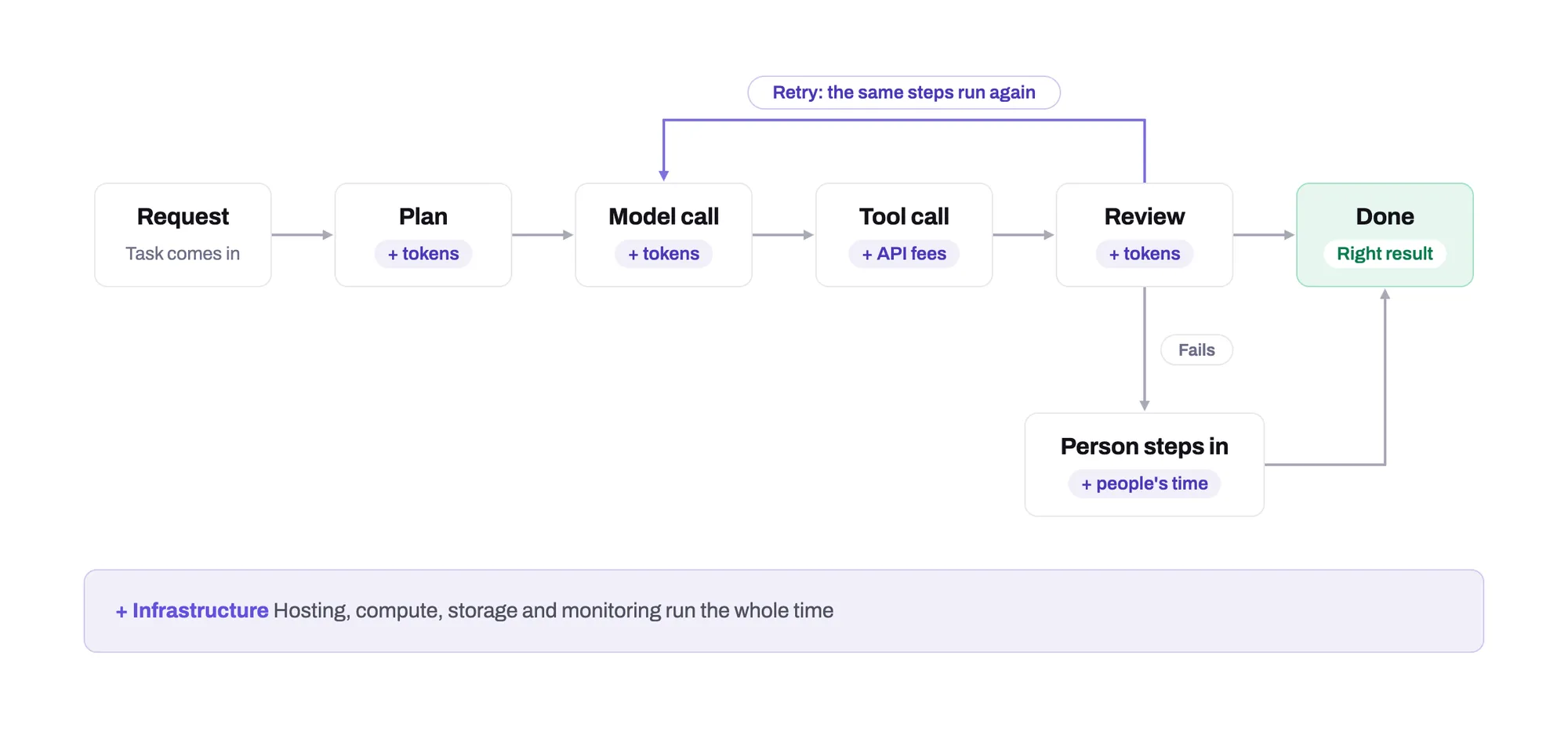
The cost of running an AI agent depends on much more than the price of the underlying model. A task might require an agent to understand a request, plan its approach, call tools, review results and decide what to do next. Each step adds model calls, tokens or calls to external services. When something goes wrong, the agent often retries or repeats earlier steps.
Recent data shows how quickly AI usage and spending are growing. Menlo Ventures' 2026 State of Enterprise AI report found that enterprise AI spending grew 4.7 times year over year on average, compared with a planned increase of 1.9 times. The report also estimates that agents account for 80% of tokens processed on OpenRouter, around seven times the volume of human-driven usage. While this is not a measure of all enterprise AI activity, it illustrates how much consumption can come from systems performing work autonomously.
But what is driving that consumption? Unlike a simple request to an AI model, an agent often works through a sequence of steps to complete a task. It may make several model calls, use external tools, process large amounts of context and repeat actions when something goes wrong. These activities all contribute to the overall cost:
- Model calls and token consumption: Multi-step workflows generate many more model calls and consume more tokens than a simple chatbot interaction.
- Retries and repeated work: Failed tool calls, incorrect outputs and unnecessary reasoning loops add cost without necessarily bringing the task closer to completion.
- Tools and integrations: Database queries, external APIs and other services often carry their own costs.
- Infrastructure and human intervention: Hosting, compute, storage and monitoring contribute to the operating bill, while people may still need to review outputs, correct mistakes or take over when an agent fails.
This is why the cost of an individual model call doesn't tell the whole story. Gartner predicted in August 2026 that inference costs per agentic workflow would increase more than fivefold through 2028. As workflows become more complex, the cost of running them can rise even as individual tokens become cheaper.
2. Measure the cost of a successful task
An agent that completes a task correctly on its first attempt has a very different cost profile from one that needs several retries or human intervention. This is why measuring inference costs alone gives an incomplete picture.
So, look at how often your agent completes tasks successfully, how many attempts it takes, how much time it spends on each task and how often someone needs to step in. Together, these factors provide a more useful measure: cost per successfully completed task.
Reducing token consumption is not necessarily an improvement if the agent becomes less reliable and needs more retries. Equally, a more capable model might cost more per call but reduce the number of attempts needed to complete a task. The objective is to find the right balance between cost, performance and reliability.
3. Why manual optimization stalls
Once you know where your agent costs come from, the next challenge is improving them. Engineers can experiment with different prompts, model choices, tools and configurations, then measure how each change affects the outcome. This can work, but it becomes difficult to scale.
Testing different configurations and evaluating results takes time, while changes can interact in unexpected ways. A configuration that reduces token consumption might also affect task quality, and one that works well for a particular set of tasks may not generalize. There is also the ongoing challenge of keeping agents optimized as underlying models, APIs and workflows change.
As agents become more complex, the number of possible configurations grows, making it increasingly difficult to find the best combination through manual experimentation alone. At that point, it stops being a tuning problem and becomes a search problem: you need a systematic way to explore alternatives, measure their impact and keep only the changes that hold up on performance and reliability. That's what automated optimization is built for.
4. What systematic optimization can achieve
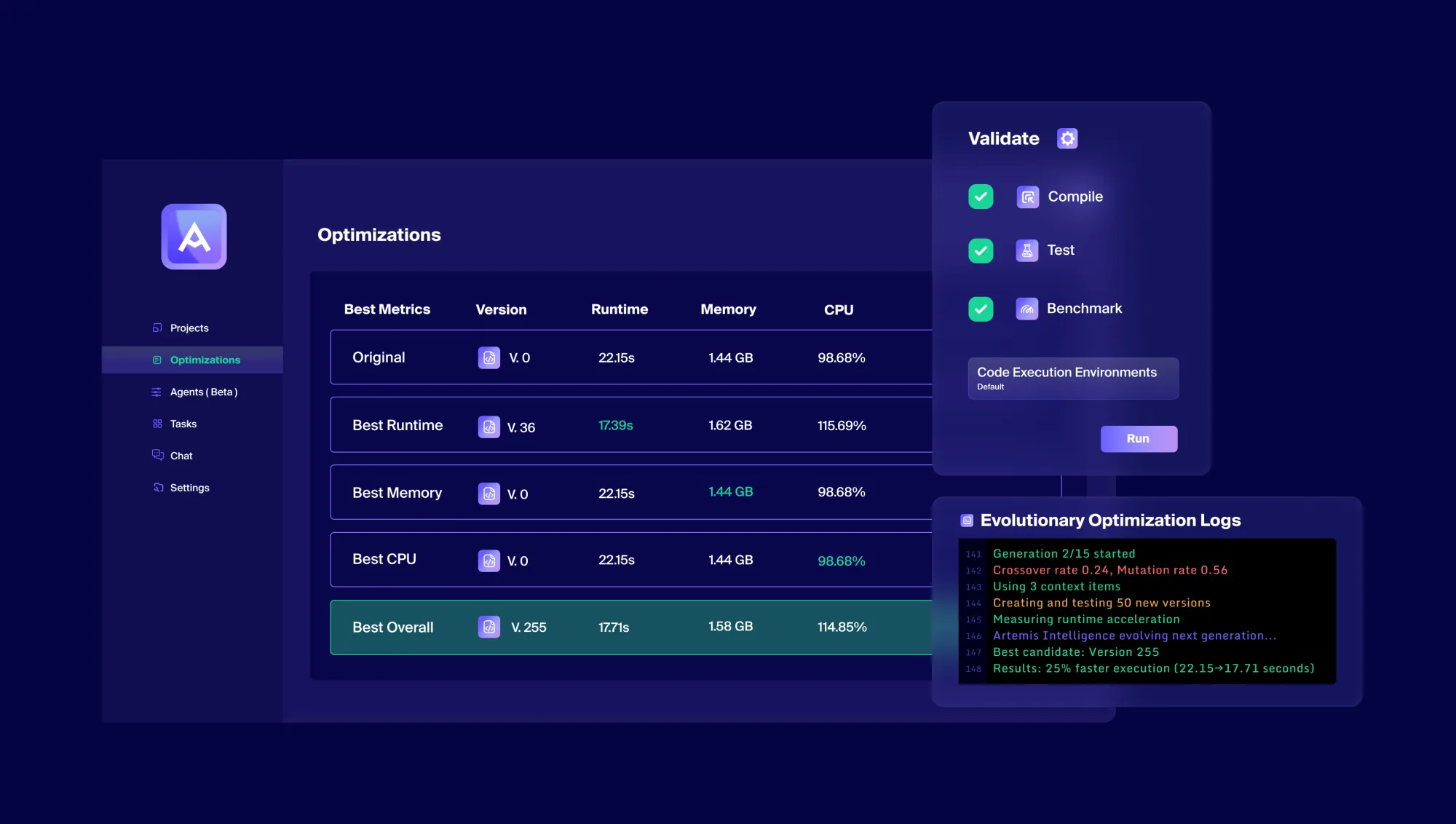
At TurinTech, we've explored this approach through our research paper, Evolving Excellence: Automated Optimization of LLM-based Agents. The research looks at how Artemis, our optimization platform, improves agent configurations automatically. It tests different versions of an agent's prompts and settings, measures each one, and keeps what performs best.
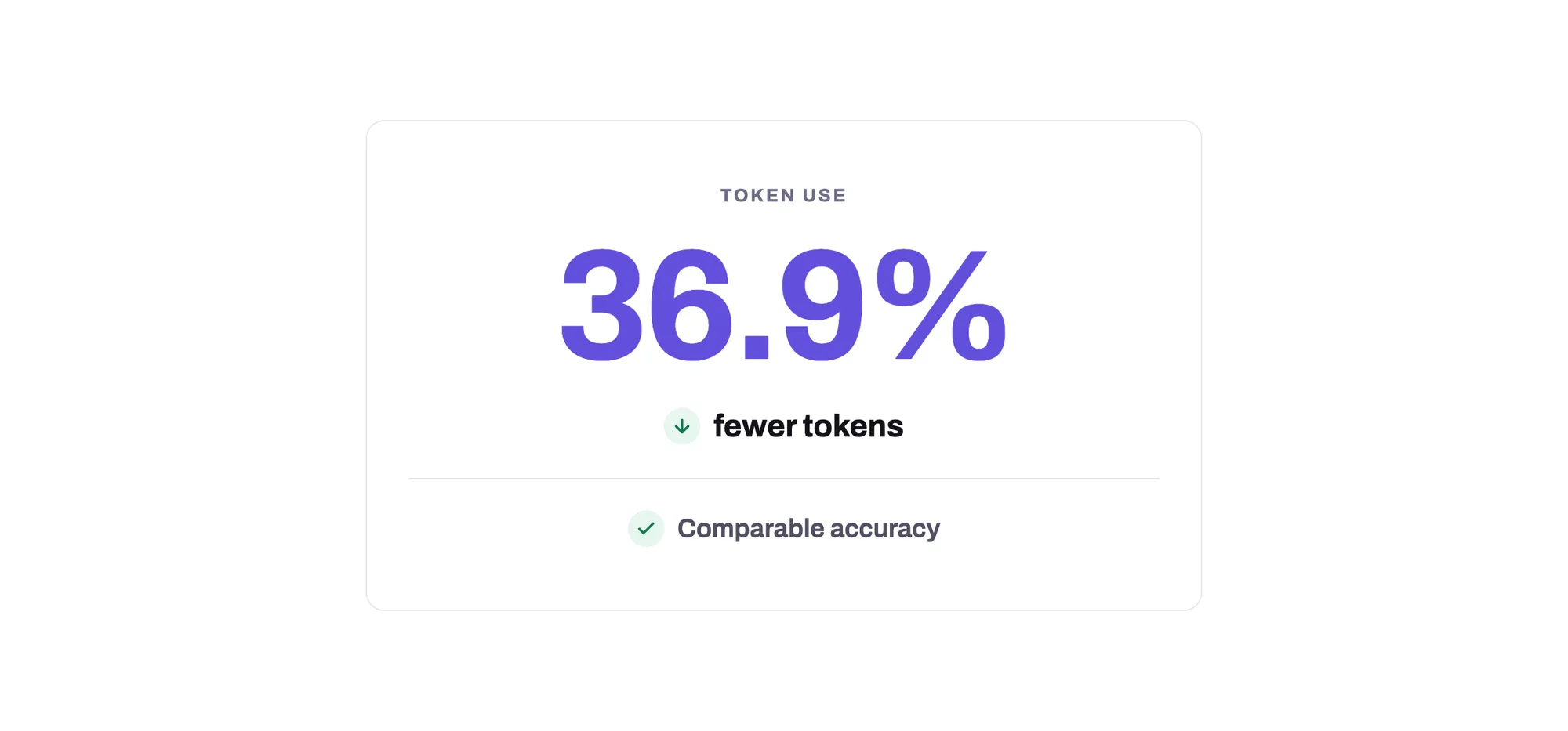
In one experiment, our approach cut average token use by 36.9% for a CrewAI agent working on mathematical reasoning tasks. This result comes from a specific experimental setup, not a guaranteed saving for every agent. It demonstrates the potential to reduce resource consumption by optimizing how an agent operates, rather than focusing only on the price of its underlying model.
We explore the methodology and experimental results in more detail in our technical article Evolutionary optimization for LLM agents.
5. A practical checklist for managing agent costs
Before trying to reduce costs, you need to understand how your agents perform across the complete workflow. A few practical steps can help:
- Measure the complete workflow: Track model calls, token consumption, latency, failures and cost per successfully completed task.
- Look for unnecessary work: Identify repeated calls, excessive context and avoidable retries.
- Use the right model for each task: Smaller or compressed models may suit simpler decisions, while more capable models can handle more demanding work.
- Evaluate cost and performance together: A saving is not useful if it compromises the quality or reliability of the result.
- Make optimization repeatable: Test alternatives systematically and validate improvements as models and workflows change.
As AI agents take on more complex tasks, controlling their costs requires more than choosing cheaper models. You need to understand how your agents operate, where resources are wasted and how to improve performance without compromising reliability. Ultimately, the question isn't just how much an individual model call costs, but how much it takes to get the right result, reliably.